

What Does A Camera Lens Hood Do
A camera lens hood is a camera lens accessory that is oft overlooked by beginners and even past some seasoned shooters. Many think information technology's just there to make you lot and your gear look more professional, merely this mere piece of plastic or metal that attaches to the front of your lens tin can brand a huge difference in the quality of your images.
This article will hopefully assistance beginners sympathize lens hoods better and shed some calorie-free (pun unintended) on how lens hoods are meant to be used to improve one's photography.
What is a Lens Hood For?
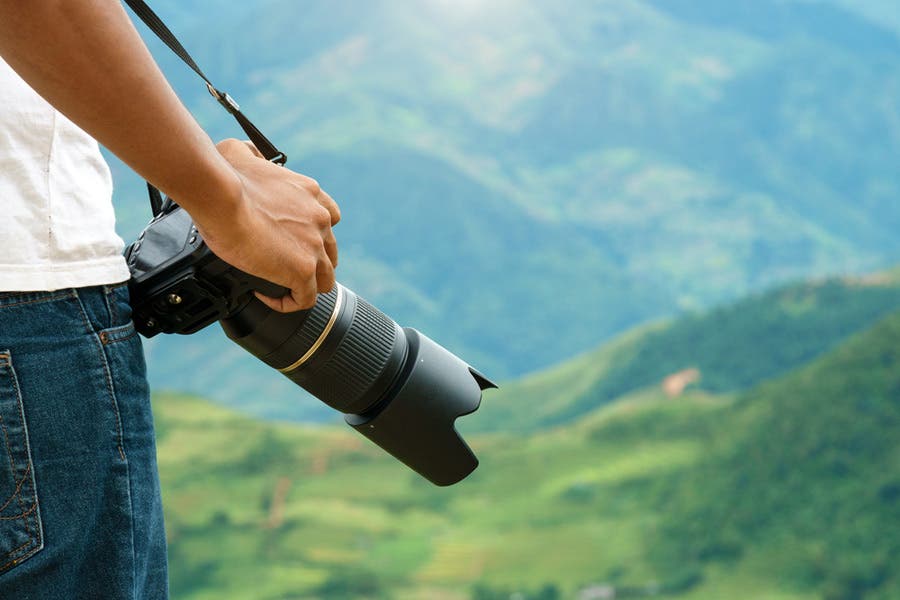
And then what is the purpose of a lens hood?
There are actually several reasons why y'all should use 1, especially when shooting outdoors or in whatever shooting state of affairs where you will be working with strong light sources. Since most types of photography essentially involve chasing lite, there are many instances when a lens hood could be useful.
Merely for you to really sympathise their value, find out how a camera lens hood tin can work for you once you've attached it to your lens:
Information technology Blocks Unwanted Light
The primary purpose of a hood is to block or reduce the amount of lens flare and glare in your photos by interim like a visor for your lens. Flare and glare are types of scattered light that hit your lens from an bending (outside the frame) and makes it hard to see, like when you step out in bright light. This is more likely to happen if you're using a depression-quality filter or an old one that doesn't take advanced anti-glare coatings.
While lens flares can serve as interesting elements in a photo, they can exist distracting, especially when they terminate up covering your subject area or nigh of your scene. Fifty-fifty when you intend to add together flares, also much of it can make your image look amateurish, which is why many professionals recommend avoiding them in general with the utilise of a lens hood.
Information technology Adds Image Contrast
When lens flares and stiff glares hit your lens, they substantially block your view. They wash out your image and potentially even produce discolorations, thus reducing contrast and overall paradigm quality.
With lens hoods, you tin keep stray calorie-free from entering the lens and ensure that information technology gets a adept, articulate view of a scene. You tin test this yourself, but make sure you use the aforementioned exposure settings in your comparison images.
It Helps Protect the Lens
An added benefit of using a lens hood is that it serves equally an added layer of protection for the front lens element. Many photographers settle for camera filters or even a lens cap to protect the external lens. However, the external placement and material of lens hoods brand them a meliorate shield against accidental impacts, scratches, fingerprints, and fifty-fifty falling snow and debris when shooting in harsh weather conditions.
While at that place'south no assurance that a lens hood could continue your lens safe when you drib it, there's still a pretty adept chance that the hood will absorb most of the impact. Any shooter would rather accept a cracked lens hood than a cracked front glass element. This is why many professionals would suggest that you proceed it on even when y'all're not worried nearly unwanted light.
Types of Lens Hoods
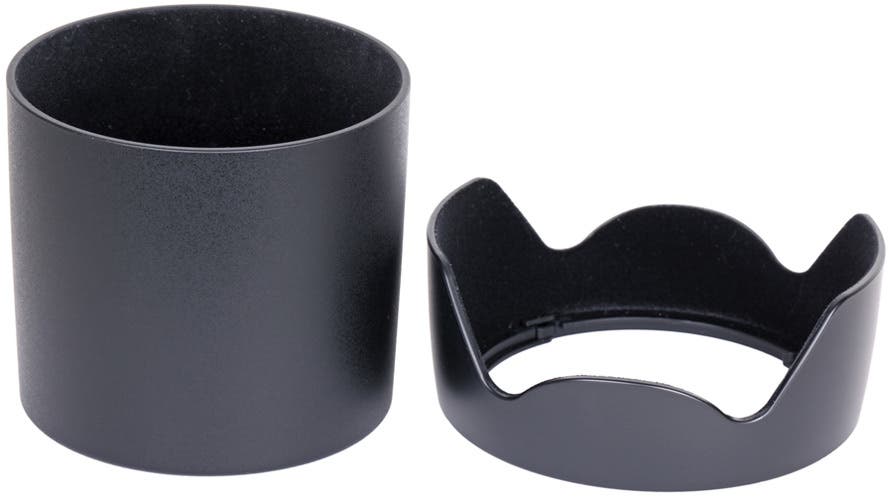
Lens hoods don't vary wildly. They simply come in two dissimilar shapes: a cylindrical shape and a petal shape.
Cylindrical Lens Hoods
Cylindrical lens hoods mostly work well in blocking stray lite and protecting your lens. They often back-trail a< prime or telephoto lens. Although they are unremarkably long, at that place's very little gamble of the hood showing upwards in your frame since the field of view becomes smaller when you showtime using longer focal lengths. You'll also find rubber lens hoods that are cylindrical in shape and flatten towards the base when non in use.
Petal Lens Hoods
Petal (or tulip) lens hoods are uniquely designed to exist shorter and have curved notches that strategically block out low-cal while maximizing the frame size offered past a wide angle lens and full-frame photographic camera sensors. It typically has iv petals and yous need to rotate them correctly so they don't end up in your frame.
Fortunately, there'southward no need to worry about which blazon or style of lens hood to buy. In that location is usually just one hood for each lens—each optimized for use with the lens' focal length range—so you can easily enquire or research virtually the appropriate lens hood shape for your lens.
When to Utilise a Lens Hood
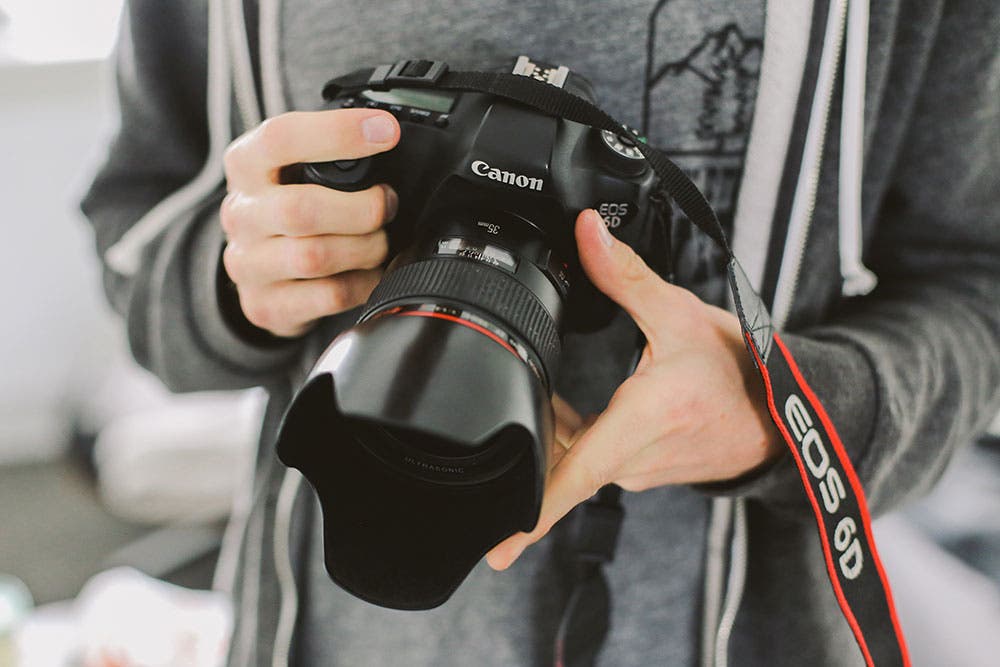
You can utilize a lens hood at whatever time of the day and in most shooting situations. Just if you must choose, recollect to take them on when:
- Your subject is backlit, such as in a backlit portrait
- You're shooting into or near strong sources of light
- Y'all take an off-photographic camera wink or any bright, off-camera light source that creates a lens flare
- You're shooting at night most street lamps, cars with their lights on, buildings, etc.
- You're doing a long shoot and there's no time to store or put on a protective lens cap
Bottomline is, yous may desire to continue your lens hood mounted on your camera at all times, unless y'all need to salvage space in your photographic camera purse and store your hoods elsewhere.
How to Use a Lens Hood
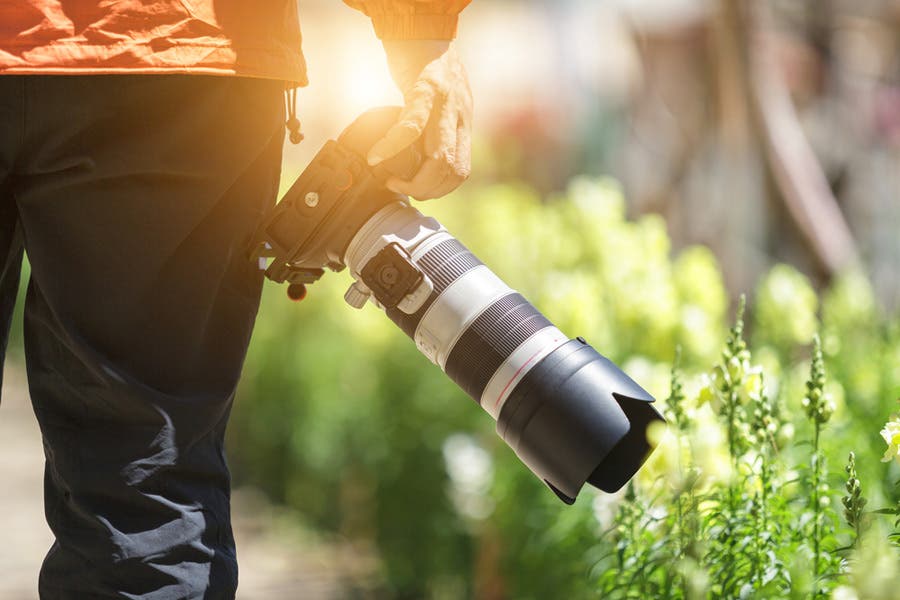
Lens hoods attach direct to the front end of your lens. Simply screw it on until it'south mounted securely before shooting. When not in utilize, you tin can remove most lens hoods or mount them in reverse in order to save infinite.
Some photographers take all the hoods off the lenses that they're carrying, stack them on top of each other, and store them like a long wide lens. Threading the camera strap through stacked hoods and securing them outside the camera handbag also helps you articulate up bag space.
Simply make sure yous don't shoot with the hood in reverse. Non only will information technology make you wait like an complete amateur, merely yous also won't go to do good from it and it might even cover office of your focus or zoom rings.
When Not to Use Lens Hoods
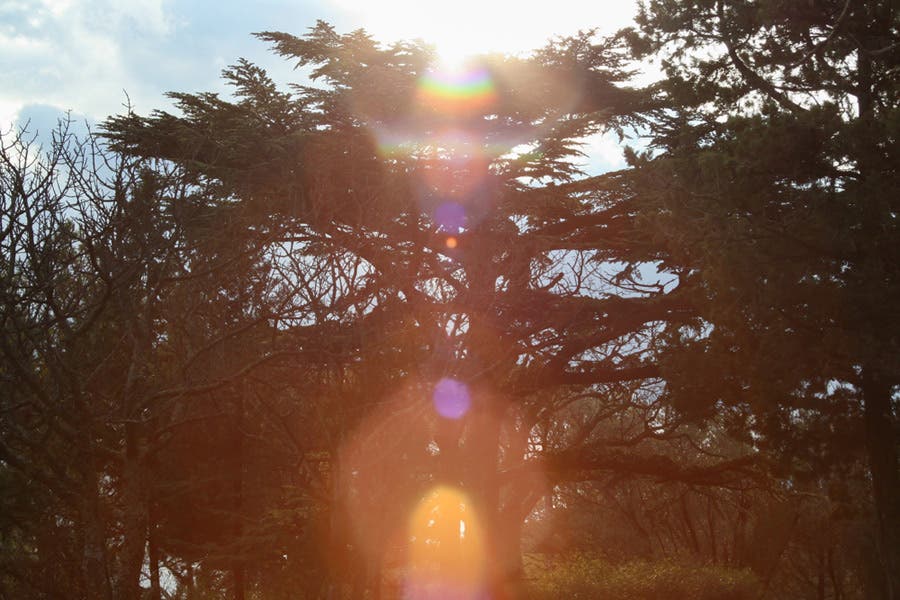
Despite all the reasons why y'all should proceed a lens hood on, at that place are a few times when you may need to take it off. Hither are a couple of those situations:
You lot want a flare effect
Flares and glares can help produce more artistic images. In fact, it'southward very like to that "filtered" event that many are trying to accomplish with photo editing programs and applications. If this is what you lot're trying to accomplish, then go ahead and shoot hood-less!
The lens hood shows in your photos
It's however possible for yous to capture the lens hood in your photograph even if yous're using one that's specifically made for the lens that you're using. This is commonly the instance when you're using a total frame photographic camera with a lens that is meant for smaller photographic camera sensor. Some lens hoods for broad-angle lenses will also show upwards at the widest focal length and create a blackness vignette around your image.
So when yous see it blocking your frame, just remove them. It but takes a few seconds, anyway.
Yous tin't attach a lens hood
There may be times when y'all have to apply certain filters or accessories (similar a ring light) on your lens, which don't take the right screw mounting feature for lens hoods. If the accessory is crucial for the photo that you're trying to achieve, then just go without the hood. You lot can e'er try blocking the low-cal manually with your complimentary hand or a piece of black card. Y'all tin can also stand next to anything that can provide shade for your lens.
The lens hood blocks your born flash
When using your camera's born wink, at that place'southward a possibility that the lens hood will create a shadow on your subject. In this instance, just remove the hood. Or, apply a detachable camera wink that doesn't sit also closely to your lens and hood.
You want to shoot more than discreetly
When you're using very long lenses, lens hoods tin can concenter a lot of unwanted attention. It can be counterproductive if you desire to shoot candids out on the street, at an event, or at family gatherings. Journalists and street photographers blend into the crowd better with smaller cameras and a prime lens — without lens hoods.
The lens hood is communicable in the wind
Finally, if you're shooting where it's very windy, information technology'southward possible for your lens hood to catch the current of air and cause the camera to milkshake, resulting in blurry images. Don't make the mistake of using a lens hood when you're using a telephoto lens (fifty-fifty when it's on a tripod as the unabridged affair can get out of balance) or when you're shooting from an airplane or helicopter.
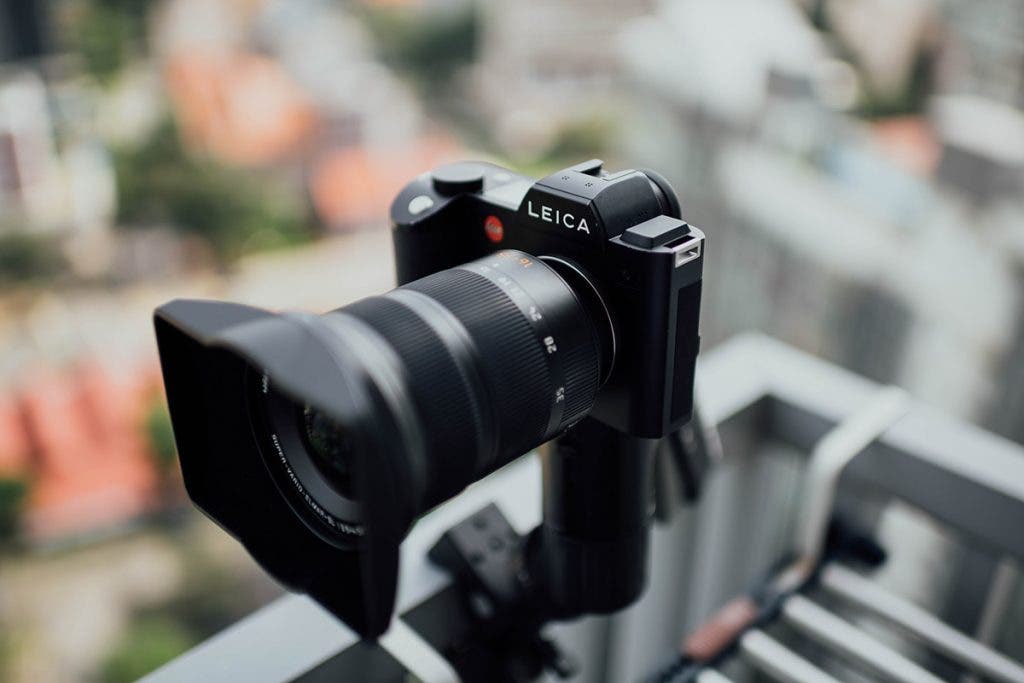
Photographic camera Lens Hood Often Asked Questions
Can you use a UV filter and lens hood at the aforementioned time?
In some instances, you can use a UV filter with a lens hood at the aforementioned time, simply not always. Some lenses, similar the Catechism RF 100-500mm f/4.5-7.1 L IS USM piece of work while using a UV filter and fifty-fifty have an opening hatch to allow you to adapt your UV filter.
It can also depend on what kind of UV filter you use. If y'all are using a round filter, you have a improve chance of it being uniform with the lens hood. Simply if y'all are using a square, clench-style, UV filter, you volition not be able to apply a lens hood with it.
Why do you lot use a foursquare lens hood?
Square lens hoods are used for shooting with ultra-wide angle lenses. These lens hoods are generally shorter than other hoods and curve to cake out any low-cal that a normal wide bending lens might permit in. These hoods must exist put on at a item angle in gild to work correctly and will allow you to photograph without worrying about vignetting.
Using a lens hood will prevent lens flares and unnecessary light from reaching your frame, creating a more than dynamic and vibrant composition. Lens hoods tin can also foreclose your glass from getting scratches, h2o, or dirt from the elements.
How exercise you measure for a lens hood?
Measuring a lens hood should be very uncomplicated. Most, but not all, lenses volition have a characterization at the finish of the hood such as "62mm". This is the ring size of that particular lens and volition let y'all to accurately purchase the correct lens hood.
Merely it is non just the circumference of the hood that matters. You besides want to brand certain that the length of the hood doesn't interfere with your photos. Make sure the hood y'all go doesn't cause whatever unnecessary vignetting and that yous can't encounter the hood in your frame. Commonly, camera brands will requite you lot info on what verbal lens hood you will need for your lens.
Tin you use lens hood with flash?
Generally, y'all should not utilize a lens hood with a flash. The lens hood tin can prevent your flash from properly exposing the lower half of your photo. Especially if yous use a wide angle, or a peculiarly more prominent lens hood. There are some cases where y'all can get away with it in an indoor setting, where the light from the flash can bounce off the walls to give you lot an even exposure. Yet, in general, it is best to avert using a lens hood and wink simultaneously.
Tin can I utilise any lens hood?
As long every bit the lens hood fits and matches your lens' thread size, you tin can use information technology. You need to make sure that the lens hood doesn't cause any unnecessary vignetting and isn't intruding on your frame.
Circular lens hoods are a condom bet in any state of affairs, and are a photographer's go-to. Petal lens hoods aren't as intrusive on your frame and are near likely to exist used with wide angle lenses. Some other great option for an ultra-wide lens is the square lens hood. A basic rule of pollex to follow: the longer the focal length, the longer the lens hood.
Characteristic prototype by JD Gipson on Unsplash

Source: https://www.adorama.com/alc/when-to-use-a-lens-hood-to-improve-your-shots/
Posted by: bixleryonstopir.blogspot.com
0 Response to "What Does A Camera Lens Hood Do"
Post a Comment